
DNA QC and Quantitation - Nanodrop Test
Short Name: DNA QC Nanodrop
Also known as: Nanodrop DNA Quantitation, DNA Purity Check, Spectrophotometric DNA QC
DNA QC and Quantitation - Nanodrop Test test available at DNA Labs India for ₹200. Uses Spectrophotometry (Nanodrop) on Extracted DNA samples. Results in Reports are typically available within 4 days after sample receipt.. Free home collection in 300+ cities across India.

🩺 Medically Reviewed By
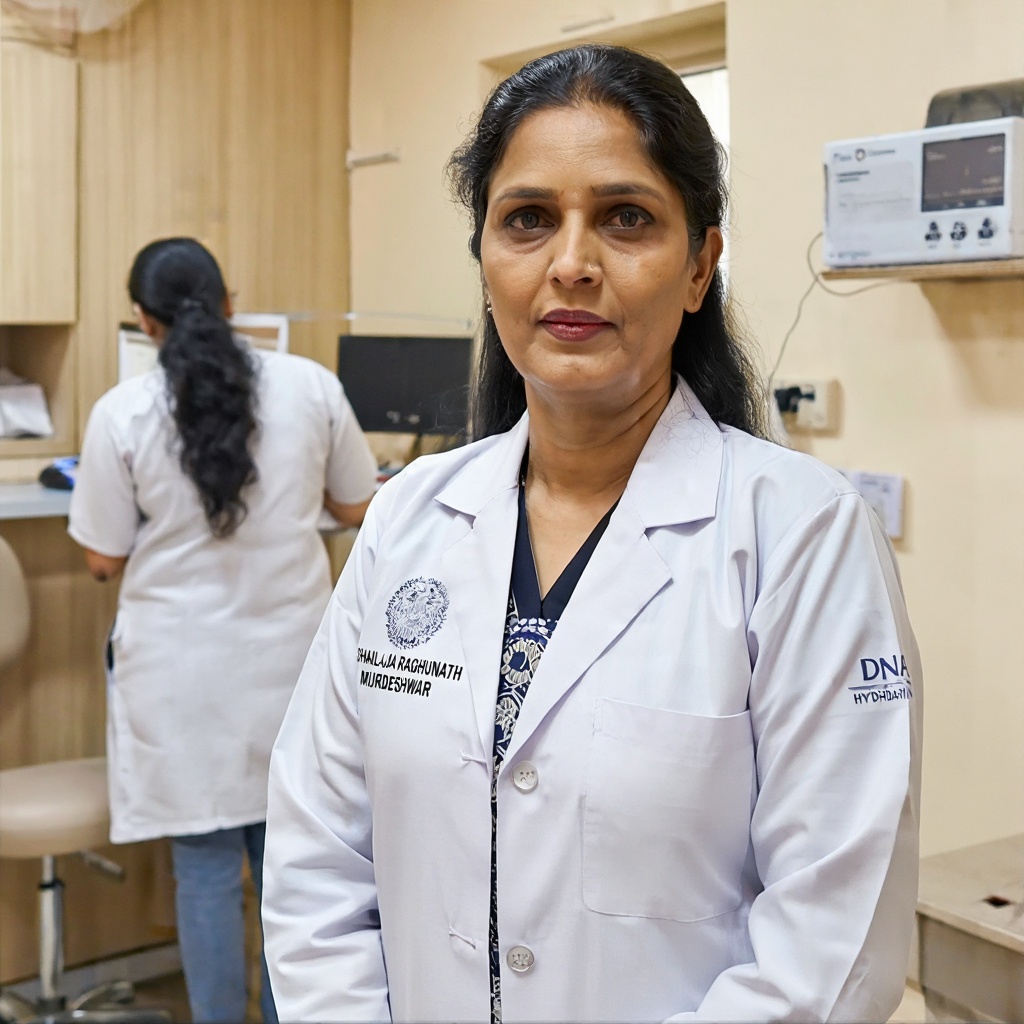
Dr SHAILAJA RAGHUNATH MURDESHWAR
Consultant Physician · Reg: 8052
Last updated: November 19, 2026
Overview
The primary purpose of DNA QC and Quantitation by Nanodrop is to assess the concentration and purity of extracted DNA samples. This ensures that the DNA is suitable for downstream applications, preventing wastage of time and resources on failed experiments. It also helps in standardizing input DNA amounts for assays like PCR and sequencing, thereby improving reproducibility and accuracy of results. DNA QC and quantitation by Nanodrop and/or Agarose Gel Electrophoresis. DNA QC and quantitation by Nanodrop and/or Agarose Gel Electrophoresis.
- Test Code
- 6332
- CPT Code
- 83890
- ICD Code
- Z01.89
- Price
- ₹200
- Sample Type
- Extracted DNA
- Result Time
- Reports are typically available within 4 days after sample receipt.
- Fasting Required
- No
- Method
- Spectrophotometry (Nanodrop)
DNA quality control (QC) and quantitation are crucial steps in any molecular biology experiment. It involves the assessment of DNA sample purity and concentration, which is essential for downstream applications such as PCR, sequencing, and cloning. Nanodrop is a commonly used instrument for DNA QC and quantitation, and its cost in India is around INR 200.
Symptoms of poor DNA quality
Poor DNA quality can lead to inaccurate results and failure of downstream applications. The symptoms of poor DNA quality include:
- Low yield
- Low purity
- Degraded DNA
- Contaminants such as proteins, RNA, and chemicals
These symptoms can be caused by various factors such as improper sample preparation, storage, and handling.
Diagnosis of DNA quality
There are several methods to diagnose DNA quality, including:
- Agarose gel electrophoresis
- Spectrophotometry
- Fluorometry
Agarose gel electrophoresis is a traditional method that separates DNA fragments based on size and provides information on DNA integrity. However, it is time-consuming and requires specialized equipment. Spectrophotometry and fluorometry are more commonly used methods that measure the absorbance or fluorescence of DNA samples and provide information on DNA concentration and purity.
Nanodrop for DNA QC and quantitation
Nanodrop is a spectrophotometer that is widely used for DNA QC and quantitation due to its high sensitivity and speed. It uses a small sample volume (typically 1-2 µl) and measures the absorbance at multiple wavelengths to determine DNA concentration and purity. The purity of DNA is calculated by the ratio of absorbance at 260 nm and 280 nm (A260/A280), where a ratio of 1.8 is considered pure DNA.
Nanodrop is a cost-effective option for DNA QC and quantitation, with a cost of around INR 200 in India. However, it has some limitations such as interference from contaminants and inaccurate results for low-concentration samples. Therefore, it is important to use Nanodrop in conjunction with other methods such as agarose gel electrophoresis to ensure accurate and reliable results.
Conclusion
DNA QC and quantitation are critical steps in any molecular biology experiment, and Nanodrop is a commonly used instrument for this purpose. Its cost in India is around INR 200, making it a cost-effective option for researchers. However, it is important to use Nanodrop in conjunction with other methods to ensure accurate and reliable results.
By taking the necessary steps to ensure high-quality DNA, researchers can avoid inaccurate results and achieve successful downstream applications.
Sample Collection
No special preparation is required. Ensure the DNA sample is already extracted and stored appropriately (e.g., in TE buffer or nuclease-free water).
Method: Laboratory collection or home collection
Laboratory Analysis
A small volume (1-2 µL) of the extracted DNA sample is placed on the Nanodrop pedestal. The measurement is taken within seconds.
Report Delivery
The sample is typically consumed during measurement; if more DNA is needed, ensure sufficient quantity is provided. Results are reported within 4 days.
Timeline: Reports are typically available within 4 days after sample receipt.
Patient Instructions
About This Test
Who Should Get This Test
The primary purpose of DNA QC and Quantitation by Nanodrop is to assess the concentration and purity of extracted DNA samples. This ensures that the DNA is suitable for downstream applications, preventing wastage of time and resources on failed experiments. It also helps in standardizing input DNA amounts for assays like PCR and sequencing, thereby improving reproducibility and accuracy of results.
DNA QC and quantitation by Nanodrop and/or
Agarose Gel Electrophoresis.
DNA QC and quantitation by Nanodrop and/or
Agarose Gel Electrophoresis.
How to Prepare
- Provide the extracted DNA sample in a sterile, labeled microcentrifuge tube.
- Ensure the sample volume is at least 5 µL to allow for measurement and repeat if needed.
- Store the sample at 2-8°C if shipping, or at -20°C for long-term storage before testing.
- Avoid repeated freeze-thaw cycles to maintain DNA integrity.
Doctor's Notes
Reviewed by Dr SHAILAJA RAGHUNATH MURDESHWAR — MBBS, MD (General Medicine) · Reg. No. 8052
"DNA quality is the cornerstone of reliable molecular testing. This Nanodrop-based QC ensures your samples meet stringent purity and concentration standards, minimizing the risk of failed experiments and erroneous results."
Last updated: November 19, 2026
Test Parameters & Specifications
Sample Stability
- Sample not labeled or mislabeled
- Sample volume less than 2 µL
- Sample visibly degraded or contaminated
- Sample not in appropriate buffer (e.g., containing high salt or phenol)
- Sample received after prolonged storage at room temperature
Understanding Your Results
A260/A280 < 1.8
Protein contamination
Recommendation: Repurify the DNA using phenol-chloroform extraction or a commercial cleanup kit
A260/A280 > 2.0
RNA contamination
Recommendation: Treat with RNase and repurify
A260/A230 < 2.0
Salt or organic solvent contamination
Recommendation: Precipitate DNA with ethanol and wash with 70% ethanol
Concentration below expected
Low yield or degradation
Recommendation: Re-extract DNA or concentrate the sample using a vacuum concentrator
If you are a patient undergoing genetic testing, your physician will interpret the DNA QC results in the context of your clinical condition. If you are a researcher, consult your lab supervisor or molecular biology expert if results indicate poor DNA quality.
Limitations
- ⚠Cannot distinguish between DNA and RNA if both are present
- ⚠Not sensitive for low-concentration samples (<10 ng/µL)
- ⚠Does not assess DNA integrity (fragmentation)
- ⚠Contaminants absorbing at 260 nm can overestimate DNA concentration
- ⚠Requires complementary methods (e.g., gel electrophoresis) for comprehensive QC
Risks & Considerations
- ●No significant risks are associated with this test as it is performed on an extracted DNA sample. If a blood or tissue sample is being collected for DNA extraction, standard risks of venipuncture or biopsy apply.
Interfering Factors
- ●Presence of proteins, phenol, or other organic solvents
- ●RNA contamination
- ●Residual salts or chaotropic agents from extraction kits
- ●Incorrect blanking or calibration of the spectrophotometer
- ●Air bubbles or particulates in the sample
- ●Low DNA concentration (<10 ng/µL) leading to inaccurate readings
Compare With Similar Tests
| Test | DNA QC and Quantitation - Nanodrop | |||
|---|---|---|---|---|
| Comparison | DNA QC and Quantitation - Nanodrop |
Frequently Asked Questions
What is DNA QC and Quantitation by Nanodrop?
Why is DNA quality important?
What does A260/A280 ratio indicate?
What is the cost of this test?
Do I need to fast for this test?
What sample is needed?
How long does the test take?
Is home sample collection available?
Can this test detect DNA degradation?
What if my DNA concentration is low?
Are there any risks?
How do I book this test?
Related Tests
Reference Laboratory Services
We serve as a reference laboratory for hospitals and clinics across India. Send samples from your facility with same-day pickup, priority processing, and results delivered through our online portal. Competitive institutional pricing available.
Your Data Privacy
Your medical data is protected under Indian law.
✓ Stored in India: All patient records are stored on servers located in India. No data is transferred outside the country.
✓ DPDP Act Compliant: Under the Digital Personal Data Protection Act 2023, you can request deletion of your records at any time by contacting support.
Book Your Test
Enter your details and we'll connect you within 15 minutes.