
FISH - Trisomy 18 / Edward Syndrome Test
Short Name: FISH Trisomy 18
Also known as: Edward Syndrome FISH, Chromosome 18 FISH, Trisomy 18 FISH Test
FISH - Trisomy 18 / Edward Syndrome Test test available at DNA Labs India for ₹6,000. Uses Fluorescence In Situ Hybridization (FISH) on Amniotic fluid, Chorionic villus sample (CVS), or Peripheral blood samples. Results in Results are typically available within 7 days after the sample reaches the laboratory.. Free home collection in 300+ cities across India.

🩺 Medically Reviewed By
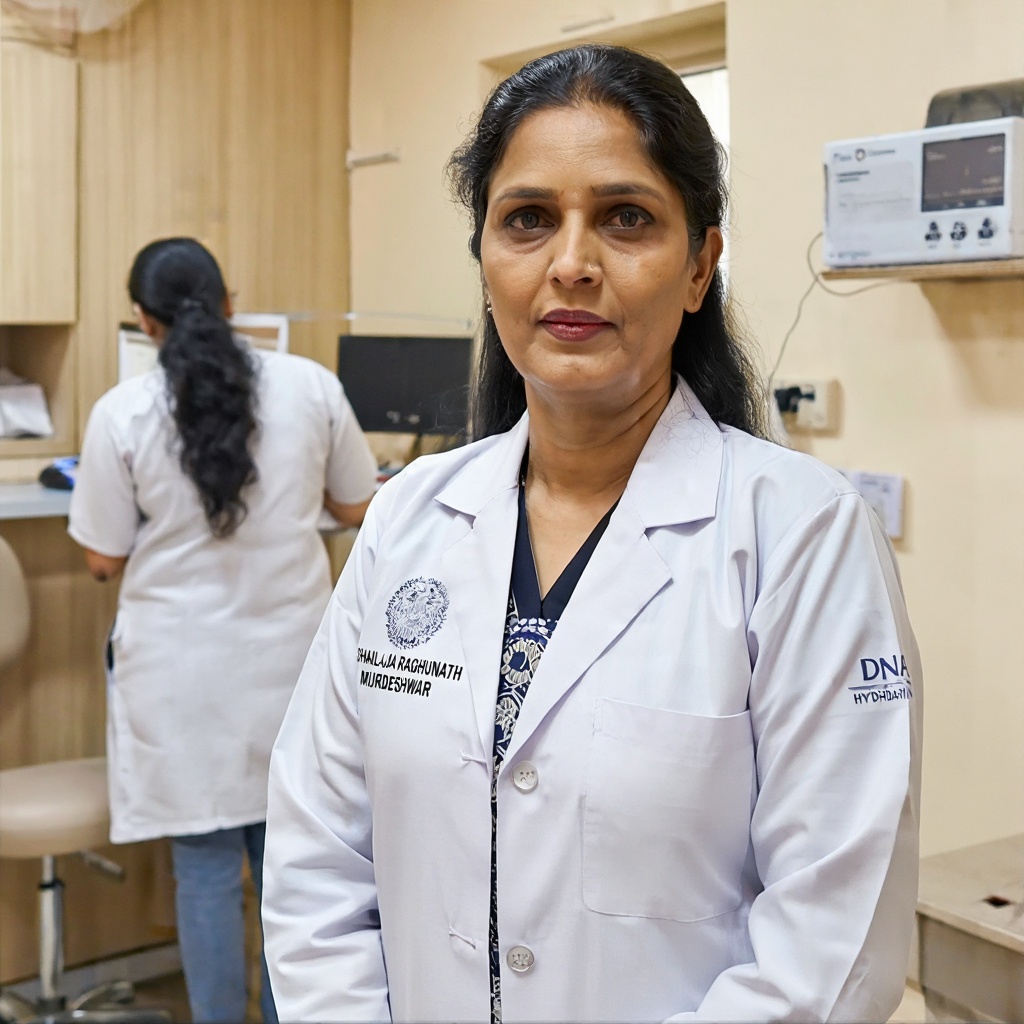
Dr SHAILAJA RAGHUNATH MURDESHWAR
Consultant Physician · Reg: 8052
Last updated: September 7, 2026
Overview
The primary purpose of the FISH Trisomy 18 test is to confirm or rule out the presence of an extra copy of chromosome 18 in fetal or newborn cells. This helps in diagnosing Edward Syndrome, guiding prenatal counseling, and assisting parents and clinicians in making informed decisions about pregnancy management and postnatal care.
- Test Code
- 6279
- CPT Code
- 88271
- ICD Code
- Q91.3
- Price
- ₹6,000
- Sample Type
- Amniotic fluid, Chorionic villus sample (CVS), or Peripheral blood
- Result Time
- Results are typically available within 7 days after the sample reaches the laboratory.
- Fasting Required
- No
- Method
- Fluorescence In Situ Hybridization (FISH)
Edward Syndrome, also known as Trisomy 18, is a rare genetic disorder caused by the presence of three copies of chromosome 18 instead of the usual two. This condition affects about 1 in 5,000 live births and is more common in females than males. It is a serious and life-threatening condition that requires early diagnosis and treatment.
One of the most reliable ways to diagnose Trisomy 18 is through a Fluorescence In Situ Hybridization (FISH) test. This test can detect the presence of an extra chromosome 18 in the cells of the fetus or newborn baby with a high degree of accuracy.
What are the Symptoms of Trisomy 18?
Trisomy 18 can cause a wide range of physical and developmental abnormalities. Some of the most common symptoms of this condition include:
- Low birth weight
- Poor feeding
- Small head circumference
- Clenched fists with overlapping fingers
- Rocker-bottom feet
- Heart defects
- Kidney malformations
- Abnormalities of the brain
Most babies with Trisomy 18 have a short life expectancy, with less than 10% surviving beyond their first year of life.
How is Trisomy 18 Diagnosed?
Trisomy 18 can be diagnosed before birth through prenatal testing, such as chorionic villus sampling (CVS) or amniocentesis. These tests involve taking a small sample of the placenta or amniotic fluid and testing it for the presence of extra chromosome 18.
After birth, Trisomy 18 can be diagnosed through a physical exam and genetic testing. A FISH test is one of the most reliable and accurate ways to diagnose this condition.
What is a FISH Test?
FISH stands for Fluorescence In Situ Hybridization. It is a genetic test that uses fluorescent probes to detect specific genetic sequences in the DNA of cells. FISH testing is often used to diagnose genetic disorders, such as Trisomy 18.
During a FISH test, a small sample of cells is taken from the fetus or newborn baby. These cells are then fixed to a microscope slide and treated with special fluorescent probes that bind to specific genetic sequences on chromosome 18. If there is an extra copy of chromosome 18 present, the fluorescent probes will bind to it and produce a bright signal under a microscope.
What is the Cost of a FISH Test for Trisomy 18?
The cost of a FISH test for Trisomy 18 in India is typically around INR 6000. This cost may vary depending on the laboratory and location.
Conclusion
Trisomy 18 is a serious genetic disorder that requires early diagnosis and treatment. A FISH test is a reliable and accurate way to diagnose this condition. If you suspect that your baby may have Trisomy 18, it is important to speak with your doctor and consider genetic testing.
At DNA Labs India, we offer a wide range of genetic testing services, including FISH testing for Trisomy 18. Our team of experienced professionals is dedicated to providing accurate and timely results to help you make informed decisions about your health and the health of your family.
Sample Collection
Duly filled Chromosome & FISH analysis Requisition Form (Form 17) and Prenatal Genetic Testing Consent Form (Form 18) are mandatory. No fasting required.
Method: Venipuncture or amniocentesis/CVS by specialist
Laboratory Analysis
For prenatal samples, a specialist will perform amniocentesis or CVS under ultrasound guidance. For blood samples, a standard venipuncture will be performed.
Report Delivery
No specific precautions. Patients can resume normal activities immediately.
Timeline: Results are typically available within 7 days after the sample reaches the laboratory.
Patient Instructions
About This Test
Who Should Get This Test
The primary purpose of the FISH Trisomy 18 test is to confirm or rule out the presence of an extra copy of chromosome 18 in fetal or newborn cells. This helps in diagnosing Edward Syndrome, guiding prenatal counseling, and assisting parents and clinicians in making informed decisions about pregnancy management and postnatal care.
How to Prepare
- Ensure the requisition form is completely filled and signed
- For prenatal samples, the procedure must be performed by a qualified obstetrician
- Samples should be transported to the laboratory at room temperature within 48 hours
- Do not refrigerate or freeze the sample
Doctor's Notes
Reviewed by Dr SHAILAJA RAGHUNATH MURDESHWAR — MBBS, MD (General Medicine) · Reg. No. 8052
"Early detection of Trisomy 18 is crucial for parental counseling and management. FISH provides rapid results, aiding timely decisions."
Last updated: September 7, 2026
Test Parameters & Specifications
Sample Stability
- Hemolyzed or clotted blood samples
- Insufficient sample volume
- Incorrect sample container
- Samples without proper requisition forms
- Samples exposed to extreme temperatures
Understanding Your Results
Normal (2 copies)
No evidence of Trisomy 18. The risk of Edward Syndrome is significantly reduced.
Clinical action: Continue routine prenatal care; consider further testing if clinically indicated.
Abnormal (3 copies)
Trisomy 18 confirmed. This is a severe chromosomal disorder with high morbidity and mortality.
Clinical action: Genetic counseling, discussion of pregnancy options, and planning for postnatal care.
Consult your doctor if you have any risk factors for Trisomy 18, such as abnormal ultrasound findings, positive screening tests, or a family history of chromosomal abnormalities. Early consultation can help in timely diagnosis and management.
Limitations
- ⚠FISH detects only targeted chromosomal abnormalities (Trisomy 18) and does not detect other chromosomal imbalances
- ⚠Results should be confirmed by conventional karyotyping or chromosomal microarray analysis
- ⚠Not suitable for detecting mosaicism below the detection threshold
- ⚠Requires specialized laboratory equipment and trained personnel
Risks & Considerations
- ●For amniocentesis/CVS: small risk of miscarriage (0.1-0.3%)
- ●Bleeding or infection at the puncture site
- ●Discomfort or cramping during or after the procedure
Interfering Factors
- ●Maternal cell contamination in prenatal samples
- ●Insufficient cell count or poor sample quality
- ●Inappropriate sample handling or transport delays
- ●Recent blood transfusion (for postnatal blood samples)
Compare With Similar Tests
| Test | FISH - Trisomy 18 / Edward Syndrome Test | FISH | Karyotyping |
|---|---|---|---|
| Comparison | FISH - Trisomy 18 / Edward Syndrome Test |
Frequently Asked Questions
What is the cost of the FISH Trisomy 18 test?
What is the turnaround time for results?
Is fasting required before the test?
What sample is needed for the FISH Trisomy 18 test?
How accurate is the FISH test for Trisomy 18?
Can the FISH test be done during pregnancy?
What does a positive FISH result mean?
Are there any risks associated with the test?
Do I need a doctor's prescription for this test?
Is home sample collection available?
Can the FISH test detect other chromosomal abnormalities?
What is the difference between FISH and karyotyping?
Related Tests
Chromosome Analysis Products of Conception Reflex Testing to FISH for Aneuploidy Detection Test
₹8,500Chromosome Analysis Cord Blood Test
₹4,000Chromotouch Chromosome SNP Microarray Optima Products of Conception Test
₹18,500FISH - Amnio Three Probes: Trisomy 18 X & Y Test
₹10,500FISH - Amnio Two Probes: Trisomy 13 & 21 Test
₹7,500FISH - SRY Gene Test
₹7,371Reference Laboratory Services
We serve as a reference laboratory for hospitals and clinics across India. Send samples from your facility with same-day pickup, priority processing, and results delivered through our online portal. Competitive institutional pricing available.
Your Data Privacy
Your medical data is protected under Indian law.
✓ Stored in India: All patient records are stored on servers located in India. No data is transferred outside the country.
✓ DPDP Act Compliant: Under the Digital Personal Data Protection Act 2023, you can request deletion of your records at any time by contacting support.
Book Your Test
Enter your details and we'll connect you within 15 minutes.