
ASCL1 Gene Central hypoventilation syndrome, congenital NGS Genetic Test
Short Name: ASCL1 Gene CCHS NGS Test
Also known as: Ondine's Curse, Congenital Central Hypoventilation Syndrome
ASCL1 Gene Central hypoventilation syndrome, congenital NGS Genetic Test test available at DNA Labs India for ₹20,000. Uses Next-Generation Sequencing (NGS) on Blood or Extracted DNA or One drop Blood on FTA Card samples. Results in 3 to 4 Weeks. Free home collection in 300+ cities across India.
🩺 Medically Reviewed By
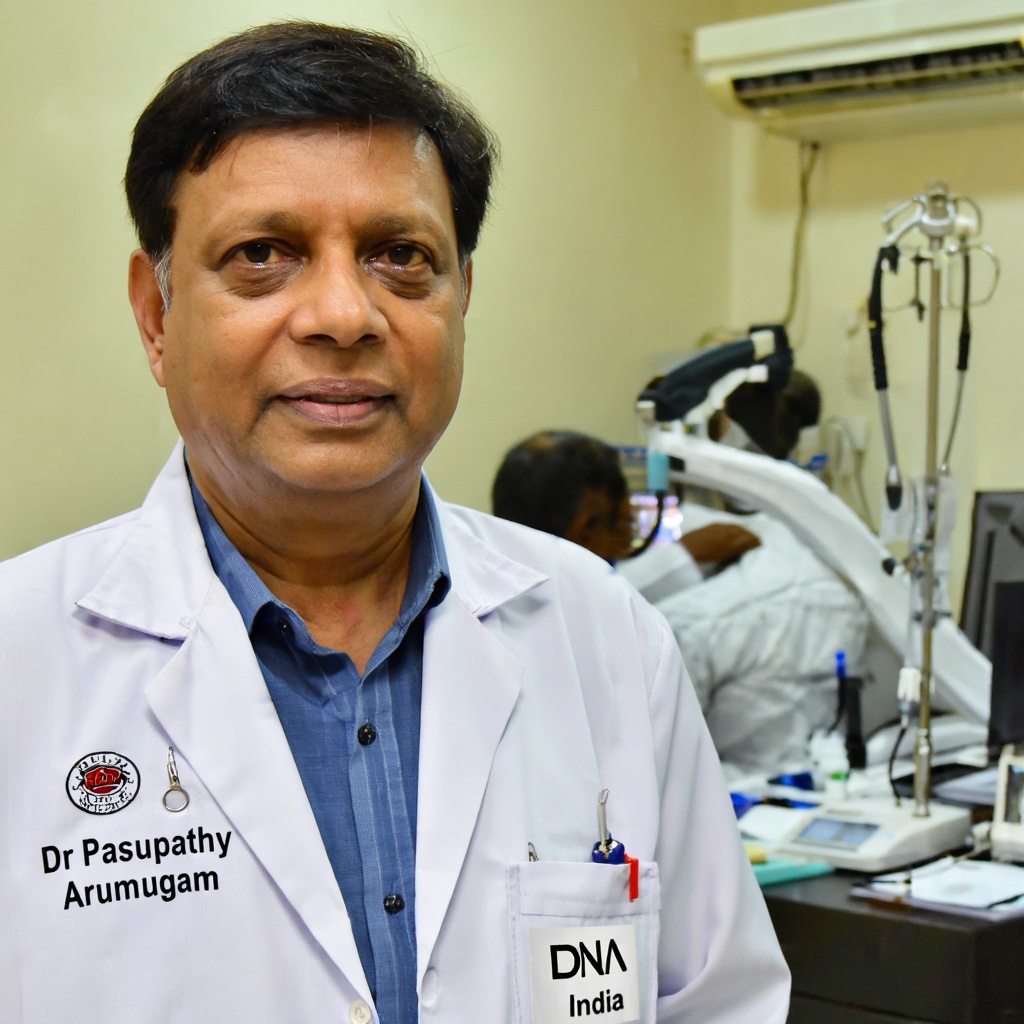
Dr Pasupathy Arumugam
Consultant Pathologist · Reg: 21521
Last updated: September 2, 2026
Overview
The purpose of the ASCL1 gene NGS genetic test is to identify mutations in the ASCL1 gene associated with congenital central hypoventilation syndrome (CCHS). This test aids in confirming diagnosis, guiding treatment strategies, and informing family planning decisions through genetic counseling.
- Test Code
- 5242
- Price
- ₹20,000
- Sample Type
- Blood or Extracted DNA or One drop Blood on FTA Card
- Result Time
- 3 to 4 Weeks
- Fasting Required
- No
- Method
- Next-Generation Sequencing (NGS)
Central hypoventilation syndrome (CHS) is a rare genetic disorder that affects the breathing control centers in the brainstem. It is also known as Ondine's curse, named after a mythological character who was cursed to forget to breathe while sleeping. CHS can be caused by mutations in several genes, including the ASCL1 gene.
ASCL1 gene mutations are associated with congenital central hypoventilation syndrome (CCHS), a type of CHS that is present at birth. CCHS affects the autonomic nervous system, which controls involuntary functions such as breathing, heart rate, and digestion. Individuals with CCHS have difficulty breathing during sleep and may require mechanical ventilation to survive.
Symptoms of ASCL1 Gene Central Hypoventilation Syndrome
The symptoms of ASCL1 gene central hypoventilation syndrome can vary, but they typically include:
- Difficulty breathing during sleep
- Daytime sleepiness
- Hypercapnia (elevated carbon dioxide levels in the blood)
- Hypoxemia (low oxygen levels in the blood)
- Bradycardia (slow heart rate)
- Difficulty swallowing
- Reduced or absent sense of smell
These symptoms may be present at birth or may develop later in life. They may also worsen over time.
Diagnosis of ASCL1 Gene Central Hypoventilation Syndrome
Diagnosis of ASCL1 gene central hypoventilation syndrome typically involves a combination of clinical evaluation, genetic testing, and polysomnography (sleep study). A physician may perform a physical exam to assess breathing function and may order blood tests to measure oxygen and carbon dioxide levels in the blood.
Genetic testing can confirm a diagnosis of ASCL1 gene central hypoventilation syndrome. This may involve targeted gene sequencing or next-generation sequencing (NGS) of multiple genes associated with CHS. NGS is a powerful tool that can sequence multiple genes simultaneously, allowing for a more comprehensive analysis of genetic mutations.
NGS Genetic DNA Test Cost in India
The cost of an NGS genetic DNA test for ASCL1 gene central hypoventilation syndrome in India can vary depending on the laboratory and the specific test ordered. However, the cost typically ranges from INR 15,000 to INR 25,000.
DNA Labs India is a leading provider of genetic testing services in India. They offer a range of NGS genetic DNA tests, including tests for ASCL1 gene central hypoventilation syndrome. Their tests are highly accurate and provide fast turnaround times.
Conclusion
ASCL1 gene central hypoventilation syndrome is a rare genetic disorder that can cause breathing difficulties and other symptoms. Diagnosis typically involves a combination of clinical evaluation, genetic testing, and polysomnography. NGS genetic DNA testing is a powerful tool that can confirm a diagnosis of ASCL1 gene central hypoventilation syndrome. The cost of an NGS genetic DNA test in India can vary, but DNA Labs India offers affordable and accurate testing services.
If you suspect that you or a loved one may have ASCL1 gene central hypoventilation syndrome, it is important to seek medical evaluation and testing. Early diagnosis and treatment can improve outcomes and quality of life.
The ASCL1 gene, also known as Achaete-Scute Family BHLH Transcription Factor 1, is associated with Congenital Central Hypoventilation Syndrome (CCHS), also known as Ondine's Curse. CCHS is a rare neurological disorder characterized by impaired control of breathing, particularly during sleep. Individuals with CCHS may have hypoventilation (inadequate breathing) and a reduced response to increased carbon dioxide levels.
Mutations in the ASCL1 gene have been linked to a subtype of Congenital Central Hypoventilation Syndrome. This gene plays a role in the development of neural crest cells, which are involved in the formation of various tissues, including those related to the autonomic nervous system responsible for regulating breathing.
A genetic test for the ASCL1 gene involves analyzing an individual's DNA to identify any mutations or variations that may be associated with Congenital Central Hypoventilation Syndrome caused by ASCL1 gene mutations.
If you or someone you know is undergoing genetic testing for the ASCL1 gene or any other genetic disorder, it's important to work closely with a medical geneticist, genetic counselor, or healthcare provider who specializes in genetics. They can provide information about the test, interpret the results, discuss the implications, and guide you through any potential medical or lifestyle considerations based on the findings.
Genetic testing can provide valuable insights into the underlying causes of certain conditions, which can lead to more accurate diagnoses and help inform treatment strategies and management plans.
Sample Collection
Provide clinical history and undergo genetic counseling to draw a pedigree chart of affected family members.
Method: Venipuncture or FTA Card
Laboratory Analysis
A blood sample is collected via venipuncture or a drop of blood on an FTA card.
Report Delivery
The sample is sent to the laboratory for NGS analysis, and results are delivered within 3 to 4 weeks.
Timeline: 3 to 4 Weeks
Patient Instructions
About This Test
Who Should Get This Test
The purpose of the ASCL1 gene NGS genetic test is to identify mutations in the ASCL1 gene associated with congenital central hypoventilation syndrome (CCHS). This test aids in confirming diagnosis, guiding treatment strategies, and informing family planning decisions through genetic counseling.
How to Prepare
- Ensure proper identification and consent.
- Follow standard phlebotomy procedures.
- Use appropriate containers for sample stability.
Doctor's Notes
Reviewed by Dr Pasupathy Arumugam — MBBS, MD (Pathology) · Reg. No. 21521
"Genetic testing for ASCL1 gene mutations is essential for early diagnosis and management of congenital central hypoventilation syndrome, improving patient outcomes through tailored interventions."
Last updated: September 2, 2026
Test Parameters & Specifications
Understanding Your Results
Pathogenic variant detected
Confirms diagnosis of ASCL1-related CCHS; consider clinical management and genetic counseling.
No pathogenic variant detected
ASCL1 gene mutation not identified; evaluate for other genetic or non-genetic causes.
Consult a doctor if symptoms such as breathing difficulties during sleep, daytime sleepiness, or family history of CCHS are present. Genetic counseling is advised for result interpretation.
Limitations
- ⚠This test only detects mutations in the ASCL1 gene; other genetic causes of CCHS may require additional testing.
- ⚠Results should be interpreted in conjunction with clinical evaluation and family history.
Risks & Considerations
- ●Minimal risks associated with blood draw, such as bruising or infection.
Frequently Asked Questions
What is ASCL1 gene central hypoventilation syndrome?
What are the symptoms of ASCL1 gene CCHS?
How is the ASCL1 gene NGS genetic test performed?
What is the cost of the ASCL1 gene NGS test in India?
Is fasting required for this genetic test?
How long does it take to get results?
What sample types are accepted for the test?
Is home sample collection available?
What should I do if the test is positive?
Can this test diagnose other types of central hypoventilation syndrome?
Is genetic counseling recommended before testing?
What is the turnaround time for report delivery?
Related Tests
Reference Laboratory Services
We serve as a reference laboratory for hospitals and clinics across India. Send samples from your facility with same-day pickup, priority processing, and results delivered through our online portal. Competitive institutional pricing available.
Your Data Privacy
Your medical data is protected under Indian law.
✓ Stored in India: All patient records are stored on servers located in India. No data is transferred outside the country.
✓ DPDP Act Compliant: Under the Digital Personal Data Protection Act 2023, you can request deletion of your records at any time by contacting support.
Book Your Test
Enter your details and we'll connect you within 15 minutes.