


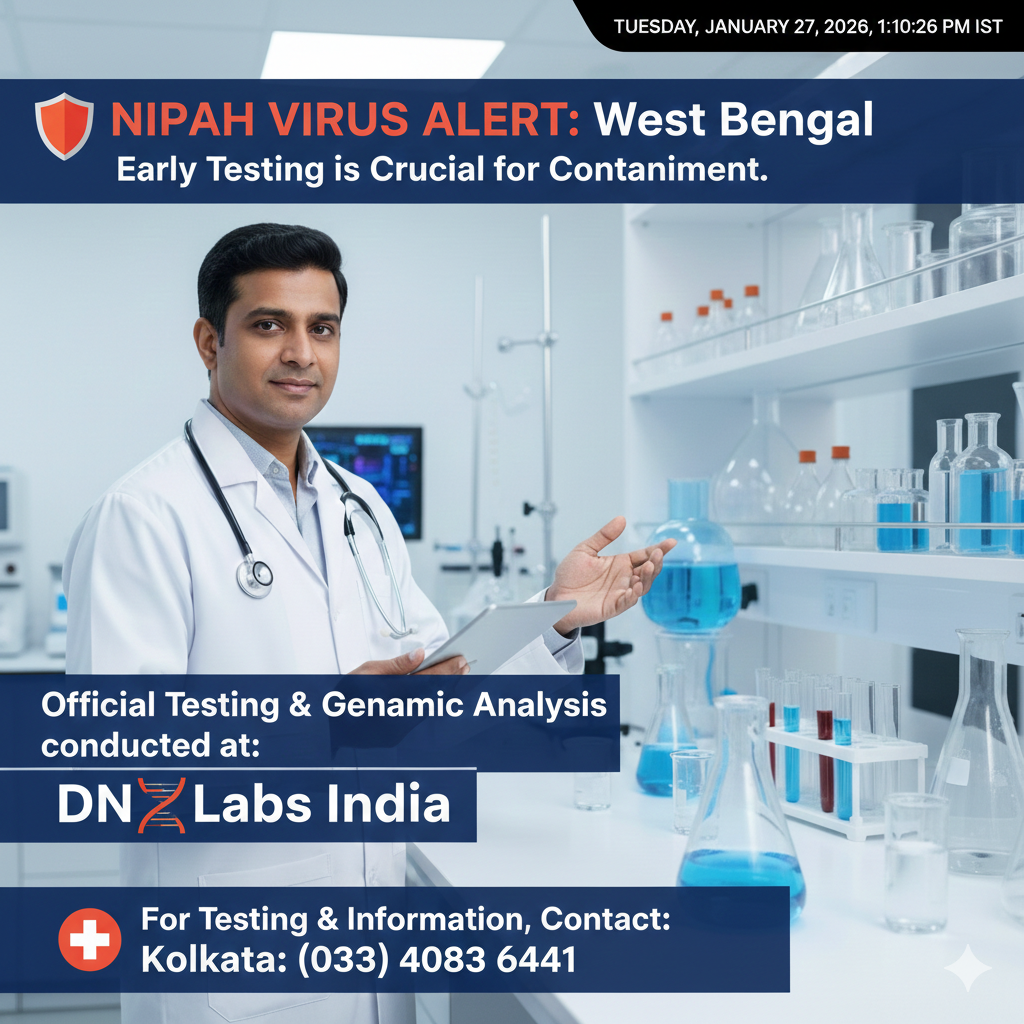
Nipah Virus Outbreak in West Bengal: 2026 Updates, Testing, and Safety Guidelines
At a Glance: Nipah Virus Testing
- Sample Required: Blood, throat swab, or cerebrospinal fluid (CSF)
- Fasting Rules: No fasting required
- Turnaround Time (TAT): 24-48 hours
- Base Cost: [Insert Current 2026 Price]
Understanding the Current Health Crisis
A concerning Nipah virus outbreak has been confirmed in West Bengal, India. This development has put local and national health authorities on high alert. The outbreak, centered in the North 24 Parganas district, highlights the persistent threat of zoonotic diseases and the critical importance of robust public health responses.
Health officials confirmed the first cases in early January 2026 after two nurses from a private hospital in Barasat tested positive. Both individuals were reported to be in critical condition, requiring intensive medical support. The situation underscores the virus's severity and its capacity to spread within healthcare settings.
Timeline of the Outbreak
The initial cases emerged among healthcare workers, suggesting human-to-human transmission following exposure to an infected patient. Since the initial confirmation, additional cases have been identified, leading to widespread contact tracing. Authorities have quarantined hundreds of individuals who had direct or indirect contact with confirmed patients to prevent further spread.
What Is the Nipah Virus?
The Nipah virus is a zoonotic pathogen, meaning it is transmitted from animals to humans. Fruit bats of the Pteropodidae family are the natural reservoir host. Human infections can occur through several pathways, including direct contact with infected bats, consumption of food products contaminated by bat secretions, or contact with infected animals like pigs.
Human-to-human transmission is also well-documented, particularly in family and healthcare settings through close contact with respiratory secretions, saliva, or other bodily fluids of infected persons. This mode of transmission makes outbreaks particularly challenging to contain.
Transmission Vectors and Incubation
The incubation period for Nipah virus typically ranges from 4 to 14 days, but periods as long as 45 days have been reported. Transmission occurs through direct contact with infected bodily fluids, contaminated food, or fomites. Unlike airborne viruses, Nipah does not spread over long distances via aerosol, making focused contact tracing and isolation highly effective.
Symptoms and Progression of Illness
Nipah virus infection can range from asymptomatic to acute respiratory infection and fatal encephalitis. Initial symptoms are often non-specific, including fever, headache, muscle pain, vomiting, sore throat, and dizziness. These can rapidly progress to severe symptoms within 24-48 hours, such as drowsiness, confusion, disorientation, acute respiratory distress, encephalitis, seizures, and coma.
| Phase | Symptoms | Timeline |
|---|---|---|
| Early | Fever, headache, muscle pain, vomiting, sore throat, dizziness | Days 1-3 |
| Severe | Drowsiness, confusion, disorientation, acute respiratory distress, encephalitis, seizures, coma | Days 4-14 |
The case fatality rate is estimated to be 40-75%, making early detection and supportive care critical. Survivors may experience long-term neurological conditions such as seizure disorders and personality changes.
Diagnosis and Testing at DNA Labs India
Early and accurate diagnosis is crucial for managing Nipah virus infection. DNA Labs India, an ISO 9001 certified laboratory, offers molecular diagnostics using Reverse Transcription Polymerase Chain Reaction (RT-PCR) for the detection of Nipah virus RNA. This test is highly sensitive and specific, providing results within 24-48 hours.
| Test | Sample | TAT | Cost |
|---|---|---|---|
| Nipah Virus RT-PCR | Blood, throat swab, CSF | 24-48 hours | [Insert Current 2026 Price] |
If you are experiencing symptoms or have been in contact with a confirmed case, consult a healthcare provider immediately. Testing should be performed under appropriate biosafety conditions.
Public Health Response and Containment Measures
In response to the outbreak, a multi-layer containment strategy has been implemented. The primary goals are to break the chain of transmission, provide optimal care to patients, and prevent panic.
Active Surveillance and Contact Tracing
Health teams have identified and are monitoring a large number of contacts. These individuals are under observation for the maximum incubation period of the virus. Any person developing symptoms is immediately isolated and tested to prevent further transmission.
Community Awareness and Prevention Guidelines
Public health messaging focuses on educating communities about risk reduction. Key recommendations include:
- Avoiding consumption of raw date palm sap, which can be contaminated by bats.
- Thoroughly washing and peeling fruits before eating.
- Avoiding contact with sick animals, especially bats and pigs.
- Practicing regular hand washing with soap and water.
- Using personal protective equipment when caring for sick individuals or handling suspected animal hosts.
Comparing Nipah Virus with Other Pathogens
It is natural for the public to draw comparisons with recent health crises. Understanding the differences can provide valuable perspective.
Nipah virus has a significantly higher case fatality rate than many common respiratory viruses. However, its transmissibility between humans is considered lower. It primarily spreads through direct contact with infected bodily fluids, rather than through airborne transmission over long distances. This difference influences containment strategies, making focused contact tracing and isolation highly effective.
Treatment and Medical Management
There are currently no licensed drugs or vaccines specifically for Nipah virus infection. Medical management is supportive, focusing on treating complications like respiratory distress and encephalitis. Maintaining hydration, managing fever, and providing respiratory support are cornerstones of care.
In previous outbreaks, investigational therapeutics have been used on a compassionate basis. These experimental treatments, including monoclonal antibodies and antiviral drugs, are thought to have improved patient outcomes and may be part of the current clinical approach.
Safety Recommendations for the Public
For Residents in Affected Areas
Remain calm and follow official guidance from health authorities. Avoid visiting areas where the outbreak has been reported unless necessary. Report any symptoms like sudden fever, headache, or breathing difficulties to health services immediately. Cooperate fully with contact tracing teams if approached.
For the General Public and Travelers
The overall risk to the general public outside the immediate outbreak zone is low. Travelers should stay informed about the latest advisories. Standard hygiene precautions—such as frequent handwashing, avoiding contact with sick people or animals, and ensuring food safety—are always recommended.
The Path Forward and Ongoing Vigilance
Health officials have stated that it will require several incubation cycles without new cases to declare the outbreak contained. The response demonstrates the importance of strong disease surveillance networks that can detect and respond to zoonotic threats quickly.
Research into vaccines and treatments continues to be a global health priority. The experience gained from managing this and previous outbreaks contributes to the world's preparedness for preventing future spillover events and managing them effectively when they occur.
This outbreak serves as a powerful reminder of our interconnectedness with the natural world. The most effective defense lies in a combination of scientific vigilance, robust public health systems, and an informed public that takes prudent, evidence-based precautions.