

At a Glance: Hepatitis Testing at DNA Labs India
- Sample Required: Blood (serum or plasma)
- Fasting Rules: No fasting required
- Turnaround Time (TAT): 24–48 hours
- Base Cost: [Insert Current 2026 Price]
Written by: Dr. A. Sharma, MBBS, MD (Microbiology)
Medically Reviewed by: Dr. R. Iyer, MD (Internal Medicine)
Last Updated: July 24, 2026
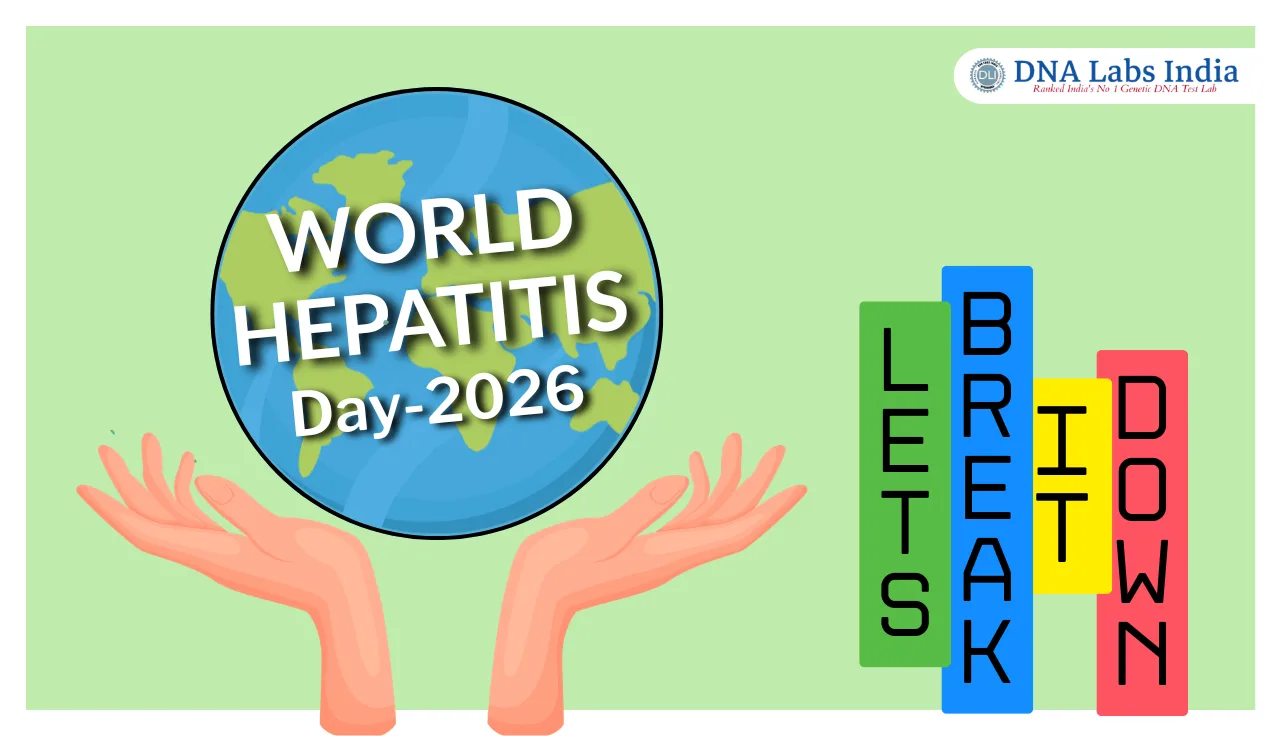
World Hepatitis Day 2026: Let's Break It Down
Every year on 28 July, the global health community observes World Hepatitis Day to raise awareness about viral hepatitis—a group of infectious diseases that cause liver inflammation and can lead to severe complications like cirrhosis and liver cancer. The 2026 theme, "Hepatitis: Let's break it down", emphasizes dismantling barriers to prevention, testing, and treatment.
At DNA Labs India, an ISO 9001 certified diagnostic laboratory, we are committed to providing accurate and timely hepatitis PCR testing to support early diagnosis and better health outcomes. This comprehensive guide covers everything you need to know about hepatitis, from transmission and symptoms to testing and prevention.
What Is Viral Hepatitis?
Viral hepatitis is an inflammation of the liver caused by one of five main viruses: Hepatitis A (HAV), Hepatitis B (HBV), Hepatitis C (HCV), Hepatitis D (HDV), and Hepatitis E (HEV). While all affect the liver, they differ in transmission routes, chronicity, and treatment options.
Hepatitis B and C are the most concerning globally, as they can become chronic and lead to liver failure or cancer. According to WHO estimates, over 300 million people live with chronic hepatitis B or C worldwide, yet many are unaware of their infection.
Hepatitis Types: A, B, C, D, and E
| Type | Transmission | Chronicity | Vaccine | Treatment |
|---|---|---|---|---|
| Hepatitis A | Fecal-oral (contaminated food/water) | No | Yes | Supportive care |
| Hepatitis B | Blood, body fluids, mother-to-child | Yes (in some) | Yes | Antivirals |
| Hepatitis C | Blood-to-blood contact | Yes (most) | No | DAAs (curative) |
| Hepatitis D | Co-infection with HBV | Yes | HBV vaccine helps | Pegylated interferon |
| Hepatitis E | Fecal-oral (contaminated water) | No | Yes (in some countries) | Supportive care |
Transmission Vectors and Incubation
Understanding how hepatitis spreads is crucial for prevention. Here are the primary transmission routes and typical incubation periods:
- Hepatitis A & E: Ingesting contaminated food or water. Incubation: 2–6 weeks.
- Hepatitis B: Contact with infected blood, semen, or other body fluids; mother-to-child during birth. Incubation: 1–4 months.
- Hepatitis C: Blood-to-blood contact (shared needles, unscreened transfusions, unsafe medical injections). Incubation: 2 weeks–6 months.
- Hepatitis D: Only occurs as a co-infection with Hepatitis B. Incubation: similar to HBV.
It's important to note that hepatitis is not spread through casual contact like hugging, coughing, or sharing food (except for HAV/HEV via contaminated food).
Recognizing the Symptoms
Many people with hepatitis, especially B and C, remain asymptomatic for years. When symptoms appear, they may include:
- Fatigue and weakness
- Fever and joint pain
- Loss of appetite, nausea, vomiting
- Abdominal pain (especially right upper quadrant)
- Dark urine and pale stools
- Jaundice (yellowing of skin and eyes)
If you experience any of these, especially after potential exposure, seek testing immediately.
Diagnosis: The Role of Molecular PCR Testing
Accurate diagnosis is the cornerstone of hepatitis management. At DNA Labs India, we use RT-PCR (Reverse Transcription Polymerase Chain Reaction) technology to detect viral RNA or DNA directly. This molecular method offers high sensitivity and specificity, allowing early detection even before antibodies develop.
Our hepatitis PCR tests include:
- Hepatitis A Virus RNA Detection PCR Test
- Hepatitis B Virus (HBV) Qualitative PCR Test
- HCV Hepatitis C Virus RNA Detection Qualitative Test
- Hepatitis D Virus Detection PCR Test
- HEV RNA Detection Qualitative Test
All tests are performed in our ISO 9001 certified laboratory, ensuring reliable results you can trust.
Prevention Strategies
Preventing hepatitis involves a combination of vaccination, safe practices, and awareness:
- Vaccination: Hepatitis B vaccine is part of routine immunization. Hepatitis A vaccine is also available. No vaccine for C, D, or E (though HBV vaccine protects against D).
- Safe injection practices: Use sterile needles and never share them.
- Safe sex: Use condoms to reduce HBV transmission.
- Food and water safety: For HAV/HEV, ensure clean drinking water and proper sanitation.
- Screening: Regular testing for at-risk individuals (healthcare workers, pregnant women, people with multiple partners, etc.)
Treatment Landscape
Treatment depends on the type and stage of infection:
- Hepatitis A and E: Usually self-limiting; supportive care with rest, hydration, and nutrition.
- Hepatitis B: Antiviral medications (e.g., tenofovir, entecavir) can suppress the virus and prevent liver damage. Regular monitoring is essential.
- Hepatitis C: Direct-acting antivirals (DAAs) can cure over 95% of cases in 8–12 weeks.
- Hepatitis D: Pegylated interferon is the mainstay, though new therapies are emerging.
Early diagnosis through PCR testing is critical to initiate timely treatment and prevent complications.
Global Impact and the 2026 Theme
Viral hepatitis is a silent epidemic. WHO estimates that 1.3 million people die each year from hepatitis-related causes, mostly from cirrhosis and liver cancer. The theme "Let's break it down" calls for breaking down stigma, financial barriers, and healthcare inequalities to achieve the goal of eliminating hepatitis by 2030.
On this World Hepatitis Day, we urge everyone to:
- Get tested if you have risk factors
- Get vaccinated against Hepatitis B
- Support awareness campaigns
- Advocate for accessible testing and treatment
Why Choose DNA Labs India for Hepatitis Testing?
- ISO 9001 certified laboratory with stringent quality controls
- Advanced RT-PCR technology for accurate molecular detection
- Timely reports (24–48 hours) with clear interpretation
- Home sample collection available at selected locations
- Competitive pricing and professional support
For appointments, call (040)49171772 or visit our website.