
Cyclosporiasis
Persistent diarrhea after consuming contaminated food or water isn’t always caused by common bacteria or viruses. Cyclosporiasis is an intestinal infection caused by the microscopic parasite Cyclospora cayetanensis. Outbreaks are increasingly recognized worldwide due to global food distribution, international travel, and improved molecular diagnostics.
What Is Cyclosporiasis?
Cyclosporiasis is a parasitic gastrointestinal infection primarily affecting the small intestine. Unlike many foodborne illnesses that resolve within days, Cyclospora infections may persist for weeks or even months if left untreated. The infection occurs worldwide but is more common in tropical and subtropical regions.
How Is Cyclospora Transmitted?
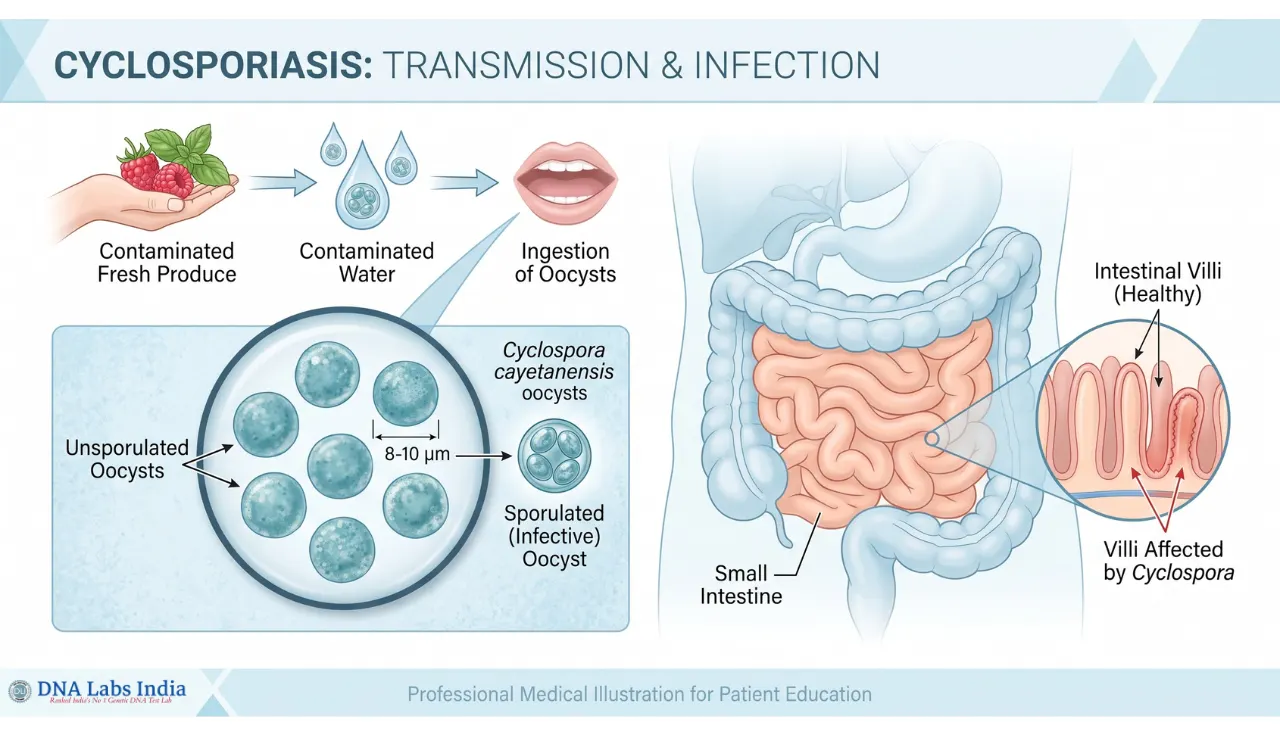
People become infected after ingesting food or water contaminated with infectious Cyclospora oocysts.
Common Sources
- Fresh leafy vegetables
- Cilantro & herbs
- Berries (raspberries, etc.)
- Salad mixes
- Contaminated drinking water
- Produce irrigated with unsafe water
⏳ Unique Feature
Freshly passed parasites are not immediately infectious. They require days to weeks in the environment to become capable of infecting another person. Direct person-to-person transmission is uncommon.
Who Is Most at Risk?
- International travelers to endemic regions
- Individuals consuming imported fresh produce
- Immunocompromised patients
- Older adults and young children
- People with chronic gastrointestinal disorders
⚠️ Symptoms of Cyclosporiasis
Symptoms usually appear 2–14 days after exposure.
Hallmark: Intermittent diarrhea — symptoms improve temporarily then return, often delaying diagnosis.
How Does Cyclospora Affect the Digestive System?
It infects cells lining the small intestine, causing damage to intestinal villi, reduced nutrient absorption, temporary malabsorption, fluid loss, and inflammation. This explains persistent fatigue and weight loss.
Diagnosing Cyclosporiasis
Traditional stool microscopy has limitations: parasites shed intermittently, multiple samples needed, special stains required, and it depends on lab expertise.
Advantages of Molecular Stool Testing
Modern multiplex PCR-based gastrointestinal panels rapidly identify Cyclospora DNA while simultaneously testing for numerous other pathogens from a single stool sample.
Learn more about comprehensive gastrointestinal pathogen detection:
🔗 BioFire GI Gastrointestinal Panel Stool Test →Treatment for Cyclosporiasis
Standard treatment: trimethoprim-sulfamethoxazole (TMP-SMX), a prescription antibiotic combination.
Supportive care: hydration, electrolyte replacement, dietary modifications, monitoring for dehydration. Patients with sulfa allergy need alternative strategies. Antidiarrheal medications only under medical guidance.
Possible Complications
- Dehydration – significant in children/older adults
- Weight loss – reduced appetite + malabsorption
- Nutritional deficiencies – temporary absorption issues
- Prolonged fatigue – beyond acute phase
Can Cyclosporiasis Be Prevented?
Food Hygiene
Wash fruits/vegetables thoroughly, peel when possible, separate raw from cooked foods.
Safe Water
Use treated or bottled water in areas with uncertain sanitation.
Hand Hygiene
Wash hands before eating, preparing food, and after restroom use.
Travel Caution
Avoid uncooked produce washed with untreated water in endemic regions.
🩺 When to Seek Medical Evaluation
Persistent diarrhea lasting more than several days, especially with:
- Severe dehydration
- Ongoing weight loss
- Persistent abdominal pain / fever
- Recent international travel
- Symptoms that repeatedly improve and recur
❓ Frequently Asked Questions
Is cyclosporiasis contagious?
Direct person-to-person transmission is uncommon; the parasite requires time outside the body to become infectious.
Can cyclosporiasis resolve without treatment?
Some infections eventually improve, but symptoms may persist weeks/months. Treatment shortens illness duration.
Can washing vegetables prevent Cyclospora infection?
Washing reduces contamination but may not eliminate all parasites, as they adhere firmly to surfaces.
Is Cyclospora the same as food poisoning?
No. It is a parasitic infection, distinct from bacterial food poisoning, though symptoms overlap.
📌 Key Takeaways
✅ Cyclosporiasis is an important but often overlooked cause of prolonged diarrhea.
🔬 Laboratory confirmation is essential — modern multiplex molecular stool testing detects Cyclospora alongside bacterial, viral, and parasitic pathogens from a single sample.
⚡ Accurate diagnosis supports faster treatment and avoids unnecessary antibiotics.

