
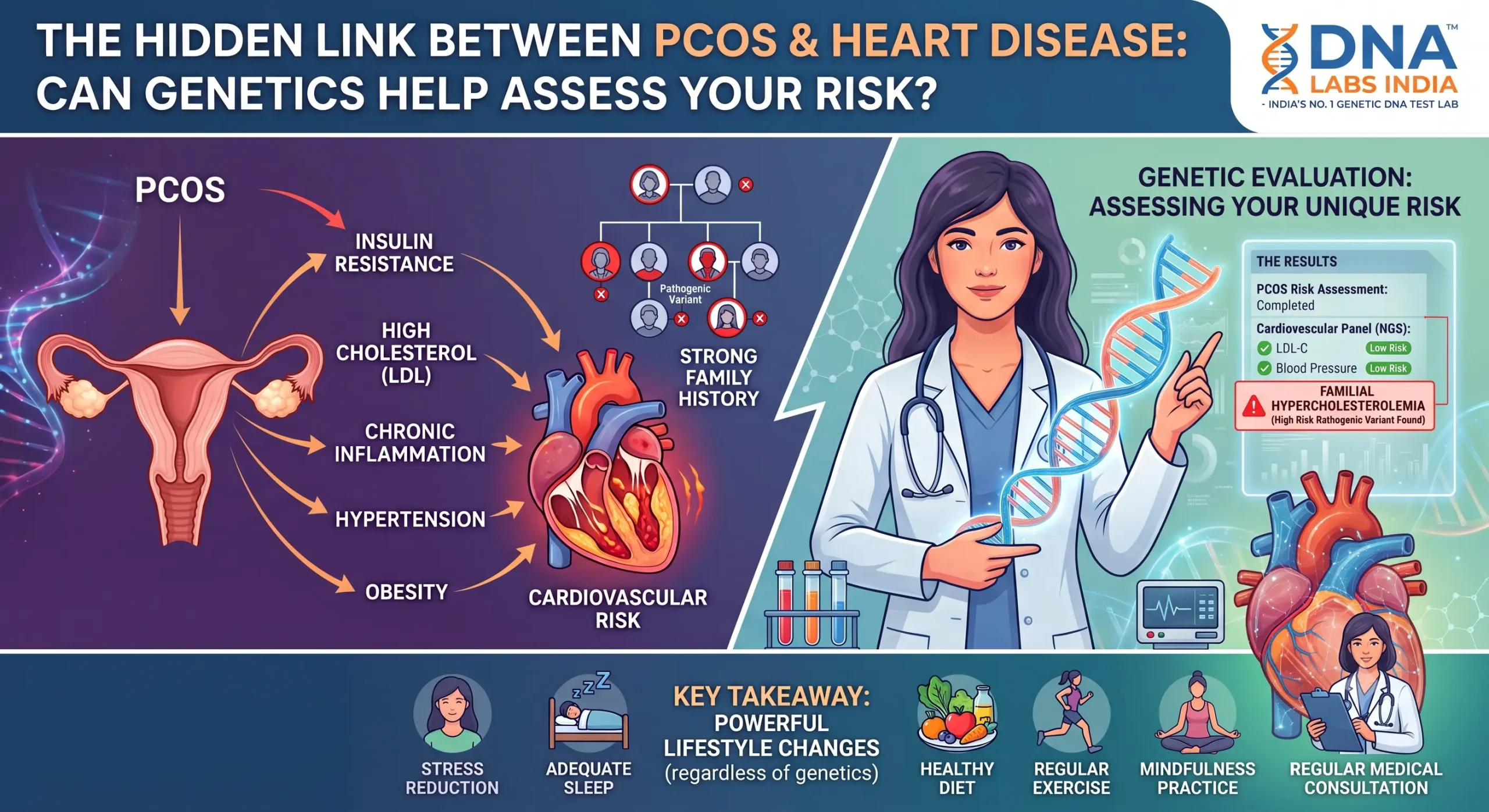
Polycystic Ovary Syndrome (PCOS) is one of the most common hormonal disorders affecting women of reproductive age, with an estimated prevalence of 8–13% globally and increasing recognition in India. While PCOS is often associated with irregular menstrual cycles, infertility, acne, and weight gain, research has revealed another important concern—its impact on long-term cardiovascular health.
Several studies suggest that women with PCOS have a significantly higher risk of developing cardiovascular disease compared to women without the condition. This increased risk is largely driven by metabolic abnormalities such as insulin resistance, obesity, dyslipidemia, chronic inflammation, and hypertension. However, family history and inherited genetic factors can further influence an individual’s susceptibility to cardiovascular disorders.
Understanding the relationship between PCOS, heart health, and genetics can help women take proactive steps toward prevention and personalized healthcare.
Why Does PCOS Increase the Risk of Heart Disease?
PCOS itself does not directly cause heart disease. Instead, it is associated with several metabolic and hormonal changes that can gradually damage blood vessels and the cardiovascular system.
1. Insulin Resistance
Up to 70% of women with PCOS may have insulin resistance, where the body’s cells respond poorly to insulin. This can lead to elevated blood sugar levels, increased fat storage, and eventually type 2 diabetes—all major cardiovascular risk factors.
2. Unhealthy Cholesterol Levels
Women with PCOS are more likely to develop dyslipidemia, including:
- High LDL (“bad”) cholesterol
- Elevated triglycerides
- Low HDL (“good”) cholesterol
These abnormalities contribute to plaque formation within arteries.
3. Chronic Low-Grade Inflammation
Persistent inflammation associated with PCOS may damage blood vessels over time, increasing the likelihood of atherosclerosis and cardiovascular disease.
4. High Blood Pressure
Hypertension occurs more frequently in women with PCOS, adding another important risk factor for heart attack and stroke.
5. Obesity and Central Fat Distribution
Many women with PCOS accumulate excess abdominal fat, which is closely linked to metabolic syndrome and cardiovascular disease.
The Role of Genetics in Heart Disease Risk
While lifestyle plays a major role, inherited genetic variants can significantly influence the likelihood of developing certain cardiovascular disorders.
Some inherited heart conditions may remain silent until adulthood and can occur even in individuals who maintain a healthy lifestyle.
Examples include:
- Hypertrophic cardiomyopathy
- Dilated cardiomyopathy
- Long QT syndrome
- Brugada syndrome
- Familial hypercholesterolemia
- Inherited arrhythmia syndromes
- Hereditary aortic disorders
These conditions often run in families and may increase the risk of sudden cardiac events.
Frequently Asked Questions
1. Does PCOS increase the risk of heart disease?
Yes. Research suggests that women with Polycystic Ovary Syndrome (PCOS) have a higher risk of developing cardiovascular disease compared to women without PCOS. This increased risk is mainly linked to insulin resistance, high cholesterol, obesity, chronic inflammation, high blood pressure, and type 2 diabetes, rather than PCOS alone.
2. Why are women with PCOS more likely to develop cardiovascular disease?
PCOS is often associated with metabolic changes that can negatively affect heart health. These include insulin resistance, abnormal cholesterol levels, elevated blood sugar, obesity, hypertension, and chronic low-grade inflammation, all of which contribute to an increased risk of cardiovascular disease over time.
3. Can genetics influence heart disease risk in women with PCOS?
Yes. While lifestyle and metabolic health are important, inherited genetic variants can also increase the risk of certain cardiovascular conditions such as inherited cardiomyopathies, arrhythmia syndromes, and familial hypercholesterolemia. Genetic risk assessment may provide additional insights, particularly for individuals with a strong family history of heart disease.
4. Should every woman with PCOS undergo genetic testing for heart disease?
No. Genetic testing is not routinely recommended for all women with PCOS. It may be considered if there is a strong family history of inherited heart disease, sudden cardiac death, cardiomyopathy, inherited arrhythmias, or very high cholesterol at a young age. A healthcare professional can determine whether genetic testing is appropriate.
5. What is a Cardiology Panel NGS Genetic DNA Test?
A Cardiology Panel NGS Genetic DNA Test uses Next-Generation Sequencing (NGS) technology to analyze multiple genes associated with inherited cardiovascular disorders. It helps identify genetic variants linked to conditions such as cardiomyopathies, inherited arrhythmias, familial hypercholesterolemia, and hereditary aortic disorders.
6. Can a Cardiology Panel NGS Genetic Test diagnose PCOS?
No. A Cardiology Panel NGS Genetic DNA Test does not diagnose PCOS. It is designed to identify inherited genetic variants associated with cardiovascular diseases. PCOS is diagnosed based on clinical evaluation, hormone testing, and imaging studies such as pelvic ultrasound.
7. Who should consider a Cardiology Panel NGS Genetic DNA Test?
The test may be beneficial for individuals with a family history of inherited heart disease, sudden cardiac death, unexplained fainting episodes, cardiomyopathy, inherited arrhythmias, or familial hypercholesterolemia. It can also support family screening when a pathogenic genetic variant has already been identified in a relative.
8. Can lifestyle changes reduce heart disease risk in women with PCOS?
Yes. Regular physical activity, maintaining a healthy weight, eating a balanced diet, managing blood pressure, controlling blood sugar and cholesterol, avoiding smoking, reducing stress, and getting adequate sleep can significantly lower cardiovascular risk in women with PCOS, regardless of genetic predisposition.
Can Genetics Explain Why Some Women with PCOS Develop Heart Disease?
Researchers believe that genetics may partly explain why cardiovascular risk varies among women with PCOS.
Although PCOS itself is influenced by multiple genes and environmental factors, inherited variants associated with cardiovascular disease can coexist independently.
For example, a woman with PCOS who also carries a pathogenic variant linked to familial hypercholesterolemia or an inherited cardiomyopathy may have a higher overall cardiovascular risk than someone with PCOS alone.
This highlights the importance of considering both metabolic health and family history when assessing long-term cardiovascular risk.
When Should Women with PCOS Consider Genetic Evaluation?
Genetic testing is not routinely recommended for all women with PCOS.
However, it may be appropriate if there is:
- A strong family history of heart disease
- Sudden cardiac death in close relatives
- Cardiomyopathy diagnosed at a young age
- Unexplained fainting episodes
- Known inherited cardiac disorders in the family
- Extremely high cholesterol from a young age
- Multiple relatives with early heart attacks
In such situations, healthcare providers may recommend evaluation for inherited cardiovascular disorders.
What Is a Cardiology Panel NGS Genetic Test?
A Cardiology Panel NGS Genetic Test analyzes multiple genes associated with inherited cardiovascular diseases using Next-Generation Sequencing (NGS).
Unlike routine blood tests or ECGs that assess current heart health, this test evaluates inherited genetic variants that may increase the risk of specific cardiovascular disorders.
Depending on the panel, it may assess genes linked to:
- Cardiomyopathies
- Inherited arrhythmias
- Familial hypercholesterolemia
- Connective tissue disorders affecting the aorta
- Sudden cardiac death syndromes
The results help clinicians personalize further evaluation and guide family screening when appropriate.
How Can Genetic Information Support Personalized Heart Care?
Genetic information can complement routine cardiovascular assessment by helping healthcare providers:
Identify inherited cardiovascular conditions
Some inherited disorders remain asymptomatic until serious complications occur.
Guide family screening
If a disease-causing genetic variant is identified, close relatives may also benefit from evaluation.
Personalize long-term monitoring
Individuals with inherited risk may require periodic cardiac imaging or specialist follow-up.
Improve preventive care
Genetic findings can be considered alongside cholesterol levels, blood pressure, diabetes status, and lifestyle factors to support individualized care plans.
Heart-Healthy Lifestyle Strategies for Women with PCOS
Whether or not genetic risk is present, lifestyle remains the cornerstone of cardiovascular prevention.
Women with PCOS are encouraged to:
- Maintain a healthy body weight
- Exercise regularly
- Follow a balanced, nutrient-rich diet
- Monitor blood pressure and blood sugar
- Manage cholesterol levels
- Avoid smoking
- Prioritize adequate sleep
- Reduce chronic stress
- Attend regular medical check-ups
These measures benefit both metabolic health and long-term cardiovascular well-being.
For women with PCOS who have a strong family history of inherited cardiovascular disorders or unexplained cardiac events, a Cardiology Panel NGS Genetic DNA Test may help identify inherited genetic variants associated with cardiovascular disease. When interpreted alongside clinical evaluation and conventional risk factors, genetic testing can contribute to more personalized prevention and family risk assessment.
Learn more about the Cardiology Panel NGS Genetic DNA Test offered by DNA Labs India:
https://dnalabsindia.com/test/cardiology-panel-ngs-genetic-dna-test

