


Hemophilia: Causes, Symptoms, Treatment, Life Expectancy & When to Seek Help
Written by: DNA Labs India Medical Team | Medically Reviewed by: Dr. [Reviewer Name] | Last Updated: [Current Date]
Quick Facts
Hemophilia is a rare inherited bleeding disorder caused by deficient clotting factors. Early diagnosis and treatment enable near-normal life expectancy.
For the Hemophilia A Carrier Detection Test:
- Sample Required: Blood
- Fasting Rules: None
- Turnaround Time (TAT): 5-7 business days
- Base Cost: [Insert Current 2026 Price]
Definition and Pathophysiology of Hemophilia
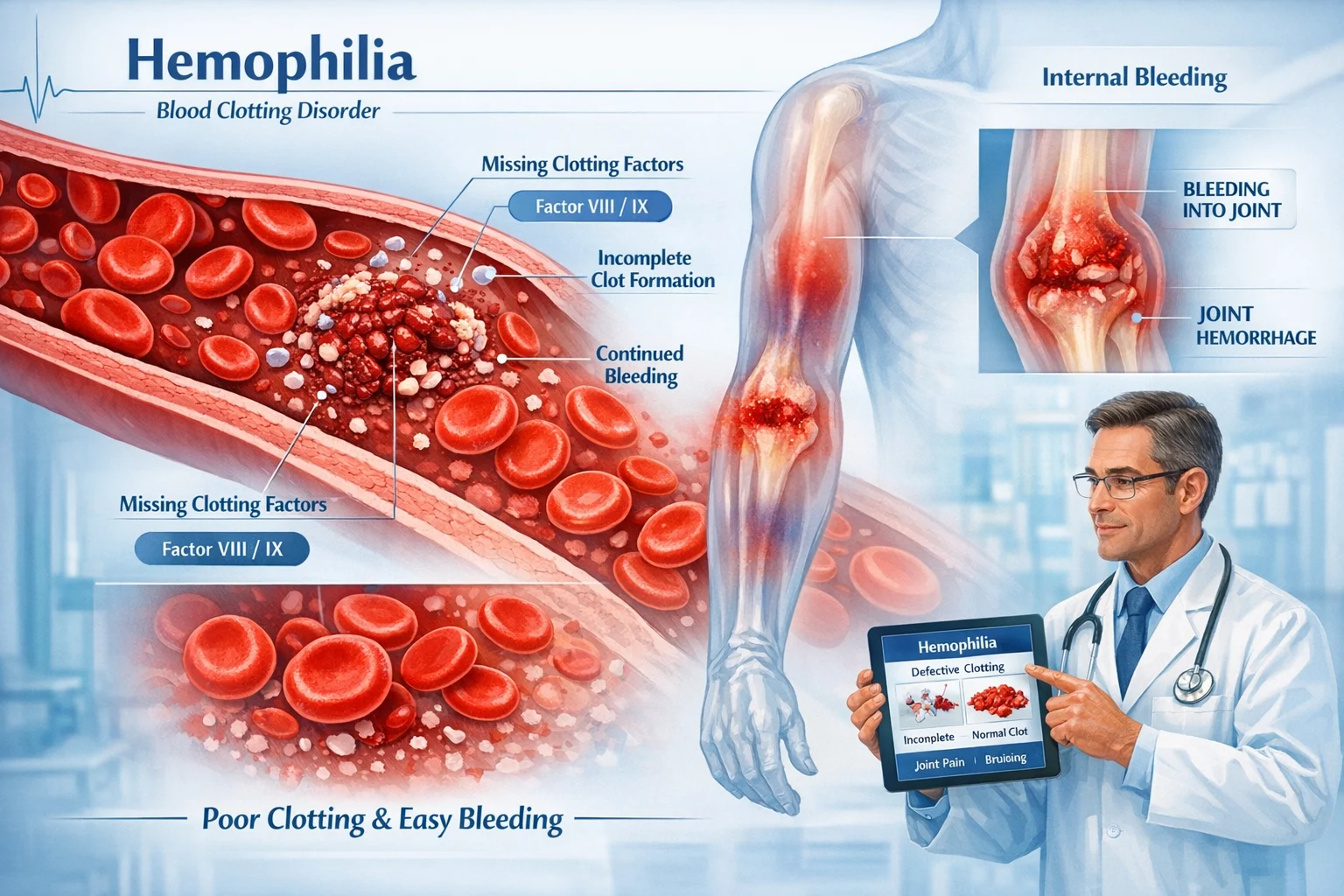
Hemophilia is a rare inherited bleeding disorder where the blood does not clot properly. This occurs due to a deficiency in specific clotting factors—proteins essential for hemostasis. Consequently, even minor injuries can lead to prolonged bleeding, and in severe cases, spontaneous internal bleeding may occur without an obvious cause.
Hemophilia is a lifelong condition, but with contemporary treatment protocols, most individuals can lead active and healthy lives.
Classification of Hemophilia
There are two primary types of hemophilia, distinguished by the deficient clotting factor:
- Hemophilia A: Deficiency of clotting factor VIII (most common, accounting for ~80% of cases).
- Hemophilia B: Deficiency of clotting factor IX.
Severity is categorized based on residual factor activity levels:
| Severity | Factor Level | Clinical Features |
|---|---|---|
| Mild | 5-40% of normal | Bleeding usually only after surgery, dental work, or significant trauma. |
| Moderate | 1-5% of normal | Occasional spontaneous bleeding; prolonged bleeding after minor injuries. |
| Severe | <1% of normal | Frequent spontaneous bleeding into joints, muscles, and internal organs. |
Genetic Etiology and Inheritance Patterns
Hemophilia is typically inherited in an X-linked recessive pattern. The gene responsible for clotting factor VIII (F8) or factor IX (F9) is located on the X chromosome. Consequently:
- Males (XY) are predominantly affected because they have only one X chromosome.
- Females (XX) are usually carriers; they may exhibit mild symptoms if one X chromosome carries the mutation and the other is normal, but severe disease is rare.
In rare instances, hemophilia can be acquired when the immune system produces antibodies that attack clotting factors, a condition known as acquired hemophilia.
Clinical Manifestations and Symptom Timeline
Symptoms vary according to severity but commonly include:
- Prolonged bleeding from cuts or injuries
- Frequent nosebleeds
- Easy bruising
- Bleeding into joints (hemarthrosis) causing pain, swelling, and stiffness
- Blood in urine or stool
- Excessive bleeding after surgery or dental procedures
Severe hemophilia may lead to spontaneous internal bleeding, particularly in joints and muscles, often presenting as acute pain and swelling.
Diagnostic Evaluation and Carrier Detection
Diagnosis is established through coagulation assays measuring factor VIII or IX levels. For individuals with a family history of bleeding disorders or suspected carrier status, genetic testing is recommended. DNA Labs India offers a Hemophilia A Carrier Detection Test utilizing advanced molecular diagnostics (NGS/WES) to identify mutations in the F8 gene.
This test is performed at our ISO 9001 certified laboratory, ensuring accurate and reliable results. To learn more or book the test, visit: https://dnalabsindia.com/test/hemophilia-a-carrier-detection-test
Therapeutic Strategies and Management
Although there is no permanent cure, hemophilia is highly manageable with contemporary therapies:
1. Clotting Factor Replacement Therapy
- Regular intravenous infusions of the deficient clotting factor.
- Administered on-demand or as prophylactic (preventive) treatment to maintain factor levels.
2. Pharmacological Agents
- Desmopressin (DDAVP) for mild Hemophilia A to stimulate endogenous factor VIII release.
- Antifibrinolytic drugs (e.g., tranexamic acid) to prevent clot breakdown.
3. Gene Therapy (Emerging)
- Novel approaches aim to correct the underlying genetic defect.
- Clinical trials have shown promising results, potentially offering a functional cure.
Complications and Long-term Sequelae
Without proper management, hemophilia can lead to serious complications:
- Chronic joint damage (hemophilic arthropathy) due to recurrent bleeding.
- Internal bleeding, including intracranial hemorrhage affecting the brain or other organs.
- Development of inhibitors (antibodies) that neutralize clotting factor replacement therapy.
- Reduced mobility and disability if joint damage is severe.
Prognosis and Life Expectancy
With modern medical care, individuals with hemophilia can achieve a near-normal life expectancy. Early diagnosis, regular prophylactic treatment, and comprehensive care significantly improve quality of life. Historically, life expectancy was markedly reduced, but advances in replacement therapy and comprehensive management have dramatically improved outcomes.
Red Flags and Indications for Emergency Care
Seek immediate medical attention if any of the following occur:
- Uncontrolled or prolonged bleeding
- Sudden severe pain or swelling in joints
- Head injury followed by headache, vomiting, or confusion
- Blood in urine or stool
- Unusual bruising without injury
Early intervention can prevent serious complications.
Lifestyle Modifications and Patient Compliance
People with hemophilia can lead active lives by:
- Avoiding high-risk physical activities that may cause trauma.
- Maintaining good oral hygiene to prevent bleeding gums.
- Adhering strictly to prescribed treatment plans.
- Attending regular checkups with a healthcare provider.
Frequently Asked Questions
1. Is hemophilia curable?
Currently, there is no permanent cure, but treatments effectively manage the condition. Gene therapy holds promise for a future cure.
2. Can females have hemophilia?
Yes, but it is rare. Females are usually carriers and may exhibit mild symptoms; severe disease is uncommon.
3. Is hemophilia contagious?
No, it is a genetic disorder and cannot be transmitted from person to person.
4. How is hemophilia diagnosed?
Through blood tests measuring clotting factor levels and genetic testing for carrier detection.
5. Can people with hemophilia exercise?
Yes, low-impact exercises like swimming and walking are recommended to strengthen muscles and protect joints.
Conclusion
Hemophilia is a manageable condition with appropriate treatment and lifestyle adjustments. Awareness, early diagnosis, and consistent care are pivotal in preventing complications and ensuring a healthy life.