
Kardiogen Genetic Risk Assessment: The New Blueprint for Heart Health
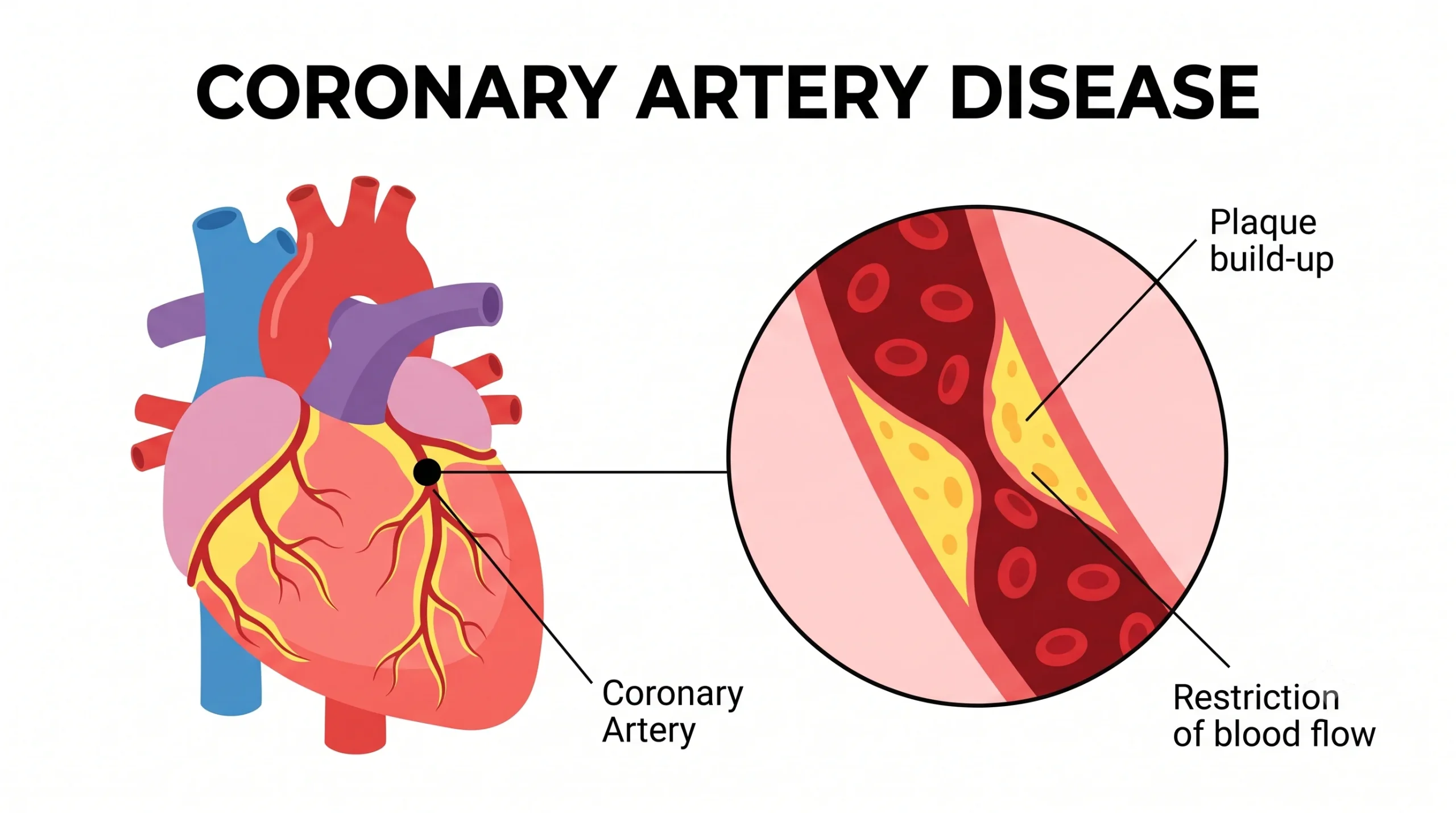
In 2021, the World Health Organization identified ischemic heart disease as the leading cause of death in India, with a staggering mortality rate of 110.8 deaths per 100,000 people. The core driver of ischemic heart disease is Coronary Artery Disease (CAD) — a condition where plaque silently builds up in the arteries, restricting oxygenated blood flow to the heart.
Because CAD develops over decades without obvious symptoms, traditional checkups often miss the underlying vulnerability until an adverse cardiac event occurs. The KARDIOGEN Polygenic Risk Score Test (CAD-PRS) by DNA Labs India shifts this paradigm entirely, moving from reactive treatment to proactive, lifelong prevention.
What is a Polygenic Risk Score (PRS)?
When standard DNA testing looks for disease, it often searches for rare monogenic disorders — conditions caused by a single “broken” gene. However, CAD is a multi-factorial, polygenic condition. This means an individual’s inherited risk isn’t tied to one gene, but rather the cumulative effect of thousands of minor genetic variations working in tandem across their DNA profile.
The Kardiogen CAD-PRS assessment bridges this diagnostic gap by performing a genome-wide screening. Using a routine blood sample, it evaluates over 1.29 million distinct genetic markers to accurately map your inherited cardiac susceptibilities.
Why South Asian Validation Matters
Historically, genomic predictive models were trained predominantly on European cohorts, limiting their accuracy for Indian populations. This is a critical blindspot, given that people of South Asian ancestry contribute to roughly 50% of total CAD cases globally and face a 40% higher CAD-associated mortality rate compared to other groups.
To deliver unprecedented local accuracy, Kardiogen utilizes a robust multi-ethnic analytical framework:
- The Harvard Predictive Model: The test leverages a sophisticated algorithm pioneered by scientists at Harvard Medical School and published in Nature Medicine.
- Dedicated South Asian Validation: DNA Labs India explicitly validated this model against a dedicated South Asian study cohort of 2,963 individuals, ensuring the Kardiogen Risk Score (KRS) is exceptionally accurate for the Indian population.
How the Kardiogen Risk Score (KRS) Works
Kardiogen synthesizes millions of genetic data points into a single, actionable risk category known as the Kardiogen Risk Score (KRS). The report provides clear, clinical risk stratification:
- Decile Bins: Your DNA results are benchmarked against the South Asian population and placed into one of 10 specific decile bins.
- Risk Zones: You are distinctly categorized into an Average, Moderate, or High risk zone.
- Odds-Ratio Context: The test reveals your relative statistical likelihood of developing CAD. For example, placing in a “High” risk bracket yields an odds ratio of 3.08 — meaning you are roughly three times more likely to develop CAD than the population benchmark.
Interactive Simulator: Polygenic vs. Traditional Risk
This interactive tool visualizes how polygenic risk acts as an invisible multiplier alongside the traditional risk factors your doctor usually checks. Drag the sliders — the PRS category will auto-update based on your cholesterol and blood pressure levels, or click a PRS button to manually set your genetic risk profile.
🟡 Moderate PRS: Genetic baseline of 14% + lifestyle contribution of 4% = 18% total risk. Moderate genetic risk adds a notable floor even with healthy lifestyle choices.
Key insight: A high genetic risk does not guarantee you will develop CAD, just as low genetic risk does not grant immunity from poor lifestyle choices. The score provides the starting line for your personalized prevention strategy.
Translating Your Score into Proactive Prevention
Identifying a high inherited risk before clinical symptoms appear allows you and your cardiologist to craft an aggressive, personalized roadmap.
- High-Value Statin Utility: Clinical data shows that individuals in high genetic risk categories who begin directed lipid-lowering therapies achieve up to a 48% reduction in their 10-year relative risk.
- Counteracting DNA with Lifestyle: Maintaining optimal nutrition and targeted exercise routines can slash 10-year complication risks by up to 46%, powerfully offsetting the impact of high-risk genes.
Ready to Discover Your Genetic Risk?
Take the first step toward proactive heart health with the Kardiogen Polygenic Risk Score Test by DNA Labs India.
Book Your Kardiogen Test →Frequently Asked Questions
What is the difference between a traditional lipid panel and the Kardiogen PRS test?
A traditional lipid panel measures the current cholesterol levels in your blood, providing a snapshot of your present health. In contrast, the Kardiogen test maps your lifelong, inherited genetic risk for developing Coronary Artery Disease (CAD) by analyzing over 1.29 million genetic markers. It tells you your baseline risk before cholesterol levels even begin to rise.
Is the Kardiogen test suitable for all age groups?
Yes. Because your DNA does not change over your lifetime, the Kardiogen test can be taken at any age. Early testing is highly recommended, as discovering a high genetic risk early in life allows for decades of proactive lifestyle choices and medical interventions.
Does a “High” Kardiogen Risk Score mean I will definitely get a heart attack?
No. A high score simply indicates a higher statistical probability of developing Coronary Artery Disease compared to the general population. It is a predictive risk factor, not a clinical diagnosis. Evidence shows that modifying lifestyle factors—such as diet, exercise, and targeted medications like statins—can significantly neutralize this inherited genetic risk.
Why is South Asian validation important for this genetic test?
Historically, most global genetic models have been built using European DNA databases, which can lead to inaccurate risk predictions for other ethnicities. People of South Asian ancestry have unique genetic profiles and face a 40% higher CAD-associated mortality rate globally. DNA Labs India explicitly validated the Kardiogen model for the South Asian population to ensure unmatched clinical accuracy for Indian patients.
How is the test performed?
The Kardiogen CAD-PRS assessment is exceptionally simple and non-invasive. It requires only a standard blood draw (EDTA sample), which is then sent to our advanced genomic sequencing labs for multi-marker analysis.

